
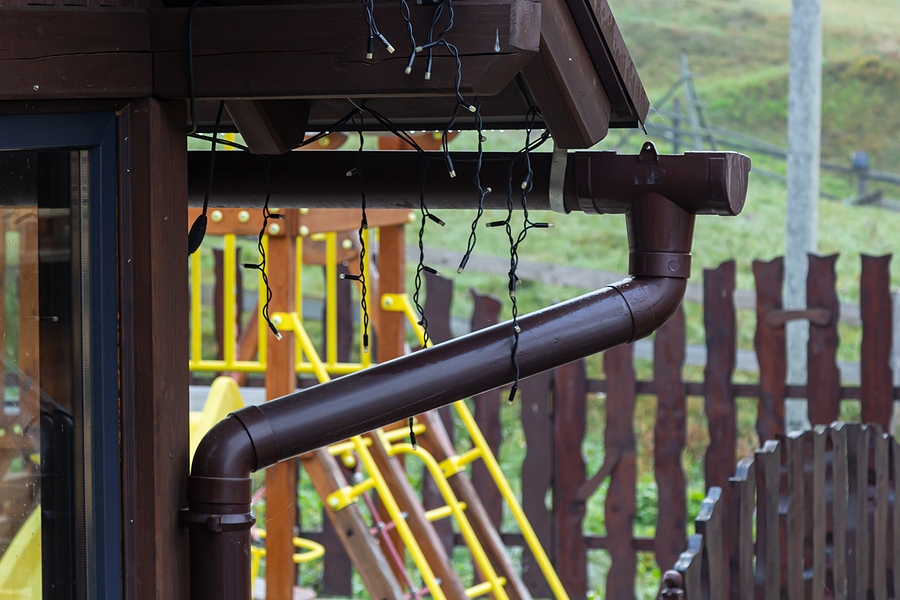
A gutter system in Southern Maine has a much harder job than simply catching summer rain. By January, it may be dealing with snow piled along the roof edge, melting water during a warm afternoon, ice forming again after sunset, and another storm arriving before anything has completely thawed.
So, what type of gutters work best in New England winters? For many homes, seamless 6-inch heavy-gauge aluminum gutters are an excellent choice because they provide generous water capacity, avoid most joints found in sectional systems, and offer the strength needed for demanding Maine conditions when properly installed and supported. York County Gutters uses this configuration as its standard for modern residential roofs.
Why Does Winter Put So Much Stress on Gutters?
Rainwater comes and goes relatively quickly. Snow and ice can hang around.
A roof may collect snow during one storm, warm enough the next afternoon for part of it to melt, and then drop below freezing that evening. Water that reaches the gutter during the day may turn to ice overnight.
Repeat that cycle several times, and the gutter carries extra weight for days rather than minutes.
Winter also exposes small weaknesses that may go unnoticed during warmer weather. A slightly loose hanger, poor pitch, or weak section of thin material can become much more noticeable once snow and ice are involved.
That is why choosing gutters for New England should involve more than deciding which profile looks nicest against the trim.
Why Are Seamless Gutters a Good Choice?
Fewer joints mean fewer potential trouble spots. Traditional sectional gutters are assembled from several pieces. Every connection creates another seam that depends on fasteners and sealant to remain watertight.
A seamless gutter forms a continuous run to fit the house.
York County Gutters fabricates its seamless aluminum gutters on site to the required length. The company notes that fewer joints reduce the places where leaks commonly begin.
That advantage matters year-round, but winter can be particularly unforgiving.
Water finds tiny openings. When that water freezes, it expands. Over repeated freeze-thaw cycles, a weak joint can become increasingly troublesome.
Corners and other necessary transitions still require careful workmanship, of course. “Seamless” does not mean the entire house receives one piece of metal with no connections anywhere.
It simply means there are far fewer.
Is Aluminum a Good Material for Maine Gutters?
Yes, especially when you use a quality, heavy-gauge product. Aluminum offers a useful combination of durability and relatively low weight. It also doesn’t rust like ordinary steel, which helps in a climate where gutters regularly encounter rain, snow, melting ice, and moisture.
Thickness matters, though.
A thin gutter and a heavy-gauge gutter are both technically aluminum, but they may not respond the same way under stress.
York County Gutters uses heavy-gauge aluminum specifically because the stronger material helps the gutter hold its shape and resist problems such as sagging and distortion.
For a New England home, that extra rigidity is worth considering.
Snow doesn’t care that the thinner option saved a little money at installation.
Why Choose 6-Inch Gutters Instead of 5-Inch?
Capacity. A 6-inch gutter has more room to handle water than a smaller residential trough. York County Gutters uses 6-inch seamless gutters as its standard because they carry more water and perform better on large or complicated rooflines.
That extra capacity helps during heavy rain, but it can matter in winter too.
Think about a warm spell after a substantial snowfall.
Several roof sections may begin shedding meltwater at the same time. If rain falls on melting snow, the amount of water reaching the eaves can increase quickly.
A larger gutter gives that runoff more room to move toward the outlets.
It still needs properly sized and positioned downspouts. A large gutter connected to a poorly functioning outlet is basically a bigger container waiting to fill up.
Are Bigger Gutters Enough to Prevent Winter Problems?
No. Size alone cannot compensate for a poor installation. Pitch is particularly important.
A gutter needs a subtle slope toward its outlets so water leaves instead of sitting in the trough. Leftover water is annoying in summer. During a Maine winter, it can freeze.
That adds weight and reduces the space available when more meltwater arrives.
For this reason, York County Gutters includes proper pitch and outlet placement in its installation standard.
The system should move water all the way through, not simply catch it.
Why Do Hangers Matter During Winter?
Because the gutter needs to remain firmly attached to the house while conditions change. Gutter hangers carry the load and help maintain the proper line along the fascia. If they are spaced poorly, loosen over time, or are attached to compromised wood, sections of the gutter can begin to sag or pull away.
Winter can make an existing weakness more obvious.
York County Gutters checks fascia and fastening conditions before installing a new system. If rot or another issue could prevent secure attachment, the company identifies it before proceeding.
That is important.
Attaching a strong new gutter to damaged fascia does not create a strong system.
The connection is only as dependable as the structure supporting it.
What Role Do Downspouts Play in Winter?
A very large one. The gutter is only the collection point.
Water still has to leave through an outlet, move down the downspout, and discharge somewhere that will not create another problem.
Restricted or poorly placed downspouts can cause water to back up in the trough. During freezing weather, that standing water may turn into ice.
Downspout discharge deserves attention too. Sending meltwater onto a walkway can create an icy patch. Letting it collect next to the foundation isn’t ideal either.
York County Gutters evaluates downspouts and outlets as part of its installation and repair work rather than treating the gutter trough as an isolated component.
Everything has to work together.
What About Leaves Before Winter Arrives?
A gutter full of fall debris is already at a disadvantage when the first freeze arrives. Leaves and other material reduce available capacity and can interfere with drainage. Water sits longer, and cold weather can freeze the entire mess together.
That is why late-fall gutter condition matters so much in New England.
Homeowners can have gutters professionally cleaned, or they may choose a gutter cover system to reduce the amount of debris entering the trough.
York County Gutters installs professional gutter covers, including Leaf Sentry® and RainDrop®, depending on the application. Covers should be installed on gutters that are already sound, correctly pitched, and draining properly rather than being used to hide an existing problem.
That last part is worth remembering.
A cover protects a good system. It does not magically repair a bad one.
Can Gutters Prevent Ice Dams?
No gutter can guarantee that an ice dam will not form. Ice dams are primarily a roof and attic heat-loss issue. Heat escaping through the roof can melt snow higher up the slope. The water travels downward, reaches the colder eave, and refreezes.
Eventually, ice builds along the roof edge.
The gutter may become involved because it sits right in that cold zone, but replacing the gutter alone does not correct the conditions causing the roof to warm unevenly.
If a home experiences recurring ice dams, insulation, air leakage, attic ventilation, and the roof assembly may all deserve attention.
That does not mean gutter design is irrelevant.
A strong, securely installed system is still better prepared for ordinary New England winter conditions than one that is already sagging, poorly pitched, or clogged before the snow arrives.
Should Damaged Gutters Be Repaired Before Winter?
Yes, if possible. A small repair in September can be much simpler than dealing with a partially detached gutter in February.
Signs worth addressing include:
- Sagging sections
- Gutters pulling away from the fascia
- Water remaining after rain
- Leaking corners
- Loose fastening
- Slow or gurgling downspouts
- Water spilling over the edge
- Damp fascia behind the gutter
York County Gutters offers tune-ups and repairs for many of these problems. When existing gutters are too damaged, chronically undersized, or made from thin, failing material, the company may recommend replacing them with its seamless 6-inch heavy-gauge aluminum system instead.
Sometimes straightening and re-pitching what you already own is enough. However, sometimes starting over is the better investment.
What Type of Gutters Work Best in New England Winters?
For homeowners wondering what type of gutters work best in New England winters, seamless 6-inch heavy-gauge aluminum gutters are a strong choice for many Maine homes. Their larger capacity helps manage heavy rain and snowmelt, seamless construction reduces unnecessary joints, and heavy-gauge aluminum provides the strength needed for a system exposed to changing weather.
Proper pitch, solid fascia, secure fastening, well-positioned outlets, and downspouts that move water away efficiently are just as important.
York County Gutters fabricates 6-inch seamless heavy-gauge aluminum gutters on site and provides installation, cleaning, repairs, tune-ups, and professional gutter covers throughout York County and nearby Southern Maine communities.
If your current gutters sag, overflow, leak, or simply do not seem ready for another Maine winter, contact York County Gutters for a free quote. A properly designed gutter system should handle everything from a July downpour to a January thaw.